Rare by Design: When Luxury Shoes Become Collectors’ Pieces
Runway creations, limited editions, discontinued colourways and impossible-to-find sizes: why the rarest luxury shoes are becoming objects to collect, not simply to wear.
A rare watch can spend decades inside a safe.
A handbag can remain untouched inside its box.
A pair of shoes has a more complicated destiny.
It was created to be worn.
And that is precisely what can make an exceptional pair increasingly difficult to find.
Years after a collection disappears from boutiques, the challenge is no longer simply locating the model. It is finding the right colour, the right material, the right size and the right condition — simultaneously.
For serious collectors, that combination can turn luxury footwear into something far more interesting than a seasonal purchase.
Because when production stops, pairs are worn, boxes disappear and sizes scatter around the world, availability can shrink dramatically.
In luxury footwear, rarity is often created by time.
Why Rarity Works Differently With Shoes
The luxury watch market has reference numbers.
Handbag collectors can identify combinations of size, leather, colour and hardware.
Footwear introduces another variable that makes sourcing significantly more complicated:
size.
Imagine a maison produces a spectacular shoe for one season.
Only part of the collection reaches each geographical market. Some sizes sell immediately. Others are worn. Some pairs are returned or damaged. Several years later, only a fraction of the original production remains in collectible condition.
Now imagine looking specifically for:
that shoe, from that collection, in that colour, in EU 38, unworn, with its original box.
The available universe becomes extraordinarily small.
This is one reason why rare footwear can be deceptively difficult to source.
A photograph of the model existing online does not mean that the pair a collector actually needs is available.
Existence and availability are two very different things.
Christian Louboutin’s Marie Antoinette: Just 36 Pairs
Few examples demonstrate this better than Christian Louboutin’s extraordinary Marie Antoinette collection.
In 2009, Louboutin collaborated with renowned embroiderer Jean-François Lesage on a miniature collection inspired by the extravagance of the French queen.
The shoes combined elaborate embroidery, lace, ribbons and extraordinary decorative work.
Only 36 pairs were created.
Vogue France described them at launch as objects created for shoe collectors and reported that the limited collection, offered exclusively through Louboutin’s Rue Jean-Jacques Rousseau boutique in Paris, had already sold out.
The original price was approximately $6,295 per pair.
But the figure tells only part of the story.
Think about what happens after seventeen years.
There were only 36 pairs to begin with.
Some will have been worn.
Some may no longer retain their original packaging.
Some will have disappeared permanently into private collections.
And of those that might become available, only a tiny proportion will exist in the particular size required by a buyer.
For a collector searching today, therefore, the question is not:
“Where can I buy the Marie Antoinette?”
The real question is:
“Does the exact pair I need even exist on the market?”
That is a completely different form of luxury.
When a Runway Shoe Becomes a Historical Object
Some footwear becomes collectible because its significance extends beyond its design.
Consider the Chanel x Reebok Instapump Fury from Chanel’s Spring/Summer 2001 collection.
Today, collaborations between luxury houses and sneaker brands are everywhere.
In 2001, they were not.
The Chanel collaboration appeared years before the luxury-fashion-meets-sneaker phenomenon became an established commercial strategy.
According to Christie’s, only a limited number of runway samples were produced and distributed to friends and family after the show.
The auction house describes the model as exceptionally rare and notes that collectors have referred to it as a “unicorn” of sneaker collecting. When Christie’s offered an example, its estimate was $10,000–$15,000.
What makes a shoe like this desirable is not simply the Chanel logo.
It represents a moment.
A collection.
An idea that preceded an entire movement in luxury.
This is the same phenomenon found elsewhere in collecting: once an object becomes historically significant, collectors begin evaluating it differently.
It stops being simply something to wear and starts becoming something to preserve.
Runway, Capsule, Collaboration, Discontinued
This is where the search becomes particularly interesting.
The most difficult luxury shoes to source often belong to one of several categories.
Runway Pieces
Some of the most spectacular footwear created by Chanel, Dior, Louis Vuitton, Alexander McQueen and other houses originates from runway collections.
The runway exists to communicate the creative universe of a season, and some designs are consequently produced in far smaller quantities than permanent commercial styles.
Once that season is over, production ends.
There is no guarantee the design will ever return.
Limited Editions
Sometimes scarcity is defined from the beginning.
Christian Louboutin’s 36-pair Marie Antoinette release represents the extreme version of this idea.
Other maisons create anniversary editions, boutique exclusives, regional releases or numbered capsules.
Christian Louboutin, for example, created an exclusive collection to commemorate the UAE’s 50th Golden Jubilee, incorporating gold and traditional handcraft inspirations specifically for the occasion.
Once collections like these disappear from boutiques, sourcing shifts to private inventories and the secondary market.
Collaborations
Collaborations concentrate demand into a production window that may never be repeated.
A specific maison.
A specific artist.
A specific year.
A specific design.
Once the collaboration ends, so does the possibility of ordinary replenishment.
Discontinued Colourways
Sometimes the rare object is not the model.
It is the colour.
An iconic shoe might remain in production for years while a particular satin, embroidery, crystal treatment, print or seasonal colour appears only once.
Years later, finding that exact configuration can be considerably harder than finding the classic version.
Manolo Blahnik: The Archive Matters
Manolo Blahnik offers another fascinating example of how footwear evolves from fashion into design history.
In 1971, at the beginning of his career, Blahnik created his famous “Ivy” shoe for Ossie Clark.
An original early example later appeared at specialist fashion auction house Kerry Taylor Auctions, which described the pair as rare and noted that a version was recreated for a Victoria & Albert Museum exhibition dedicated to Clark.
More than five decades later, the design remains part of Blahnik’s creative history.
And the relationship between the designer and historical references continues.
In 2025, Manolo Blahnik created another special capsule inspired by Marie Antoinette, coinciding with the V&A’s major Marie Antoinette Style exhibition. The collection revisited the designer’s long-standing fascination with the queen and his work creating footwear for Sofia Coppola’s 2006 film Marie Antoinette.
For collectors, details like these matter.
Who designed it? For which collection? Why was it created? How long was it produced? What cultural moment does it represent?
The story behind a pair can become as important as the shoe itself.
The Condition Problem
Then comes the factor that makes footwear fundamentally different from almost every other major luxury collectible.
Wear.
Walking immediately changes a shoe.
Leather soles become marked.
Red Louboutin soles lose their pristine finish.
Insoles show use.
Satin can stain.
Crystal embellishments can become loose.
Heel tips wear down.
Delicate leather can crease.
Packaging and replacement components disappear over time.
This means an unworn example of an already scarce shoe can become dramatically harder to find with every passing year.
For a collector-grade pair, seemingly minor details can matter:
Original box. Dust bags. Spare heel tips. Original tissue and packaging. Receipts or documentation. Unmarked soles. Unaltered construction.
And most importantly:
the correct size.
A pristine EU 35 does very little for the collector searching for an EU 39.
That sounds obvious.
From a sourcing perspective, it changes everything.
Can Rare Shoes Increase in Value?
Yes — but rarity should never be confused with guaranteed appreciation.
The secondary market for luxury women’s footwear is less mature and less liquid than the markets for watches or Hermès handbags.
Many expensive designer shoes depreciate after purchase.
Even some historically interesting pieces can trade for relatively modest amounts.
That makes selectivity essential.
The strongest candidates for long-term collector desirability generally combine several characteristics:
Extremely limited production
A major maison or designer
An identifiable historical collection
Cultural significance
Distinctive and recognisable design
Exceptional condition
Original packaging and provenance
A desirable size
Very limited availability on the secondary market
Most importantly, there must still be demand.
A shoe can be rare because only fifty exist.
If nobody wants one, scarcity alone creates little value.
But when genuine scarcity meets cultural relevance and collector demand, something more interesting can happen.
The market begins competing for a supply that can never be replenished.
The Perfect Pair Problem
This leads to one of the greatest challenges in sourcing collectible footwear.
A client may know exactly what she wants.
A discontinued Chanel slingback.
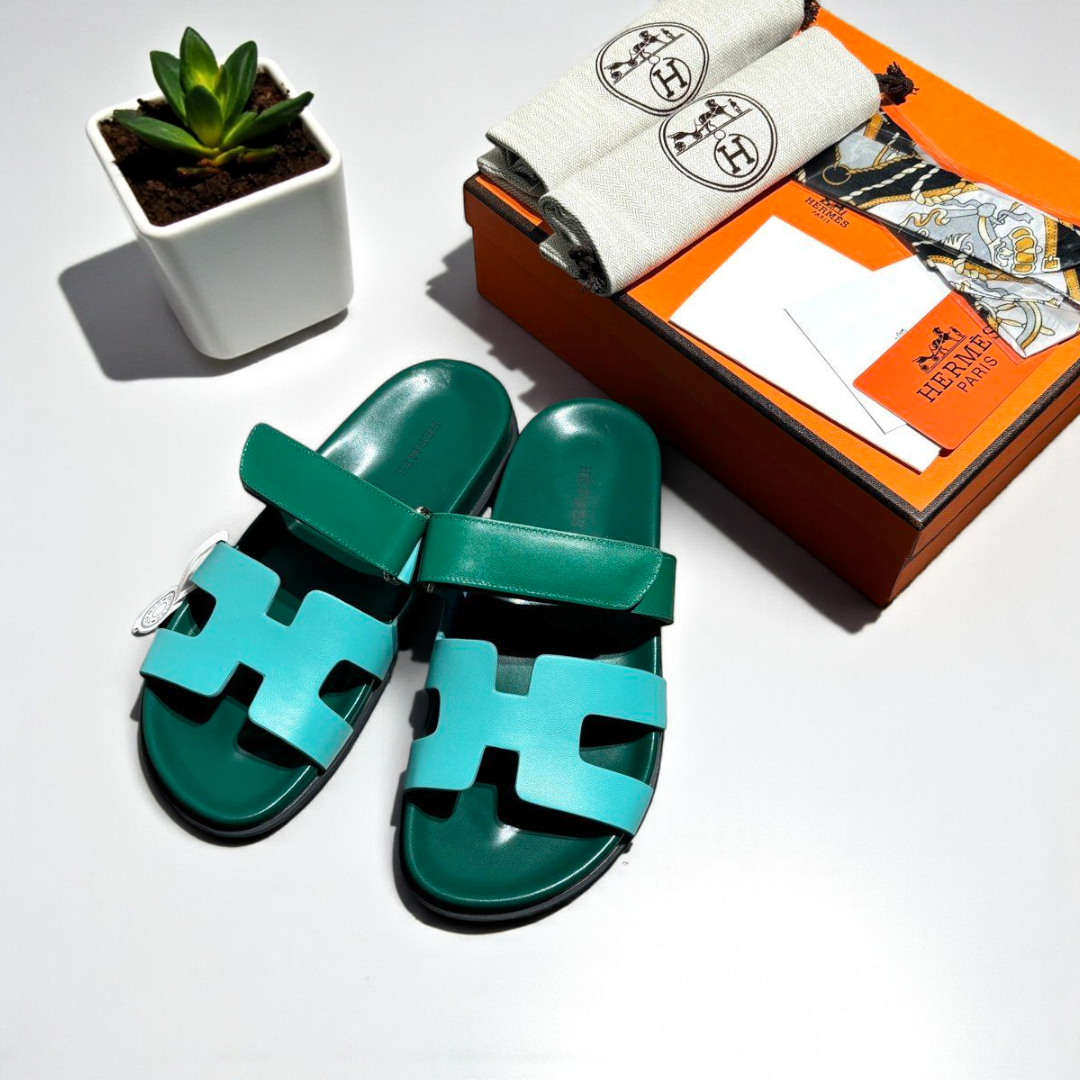
A rare Hermès Oran variation.
A crystal-covered Christian Louboutin from a past collection.
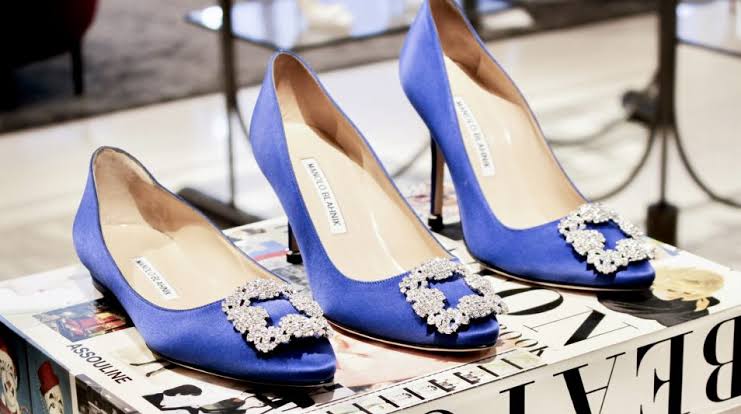
An archival Manolo Blahnik.
A Dior runway heel.
Perhaps images of the shoe exist everywhere online.
Finding one available is another matter.
Finding one authentic, in excellent condition and in her exact size can require searching across multiple countries, specialist dealers, private collectors and inventories that never appear in conventional online searches.
This is what we call the perfect pair problem.
And it is precisely where specialist sourcing becomes valuable.
Dolce Vita Shopping: We Find the Pair Others Cannot
At Dolce Vita Shopping, rare footwear is one of our greatest strengths.
We do not limit our search to what is currently displayed in boutiques or listed by conventional online retailers.
Our sourcing approach is designed around what is difficult to find.
Limited editions.
Sold-out collections.
Discontinued colourways.
Runway pieces.
Rare collaborations.
Unusual materials.
Past-season icons.
Collector-grade examples.
And, crucially, the right pair in the right size.
A client may come to us with nothing more than an old photograph.
She may remember a shoe from a Chanel collection several years ago.
She may be searching for a specific Louboutin that has disappeared from boutiques.
Perhaps she wants the exact Manolo Blahnik she once saw but never purchased.
Perhaps the model is available — but never in her size.
That is where the search begins.
Through an international sourcing network and relationships across the luxury market, Dolce Vita Shopping searches beyond conventional retail channels to locate exceptional footwear around the world.
Because finding a beautiful shoe is easy.
Finding a rare one is harder.
Finding the exact rare pair, in the exact configuration, in the exact size and in exceptional condition is something else entirely.
Dolce Vita Shopping — We find what others cannot
Tell us what you're hunting →