The New Uniform of Quiet Luxury: Why Loro Piana and Hermès Shoes Are Everywhere
From the Loro Piana Summer Walk to the Hermès Chypre, a new generation of luxury footwear has become a global status symbol — precisely because it does not need to shout.
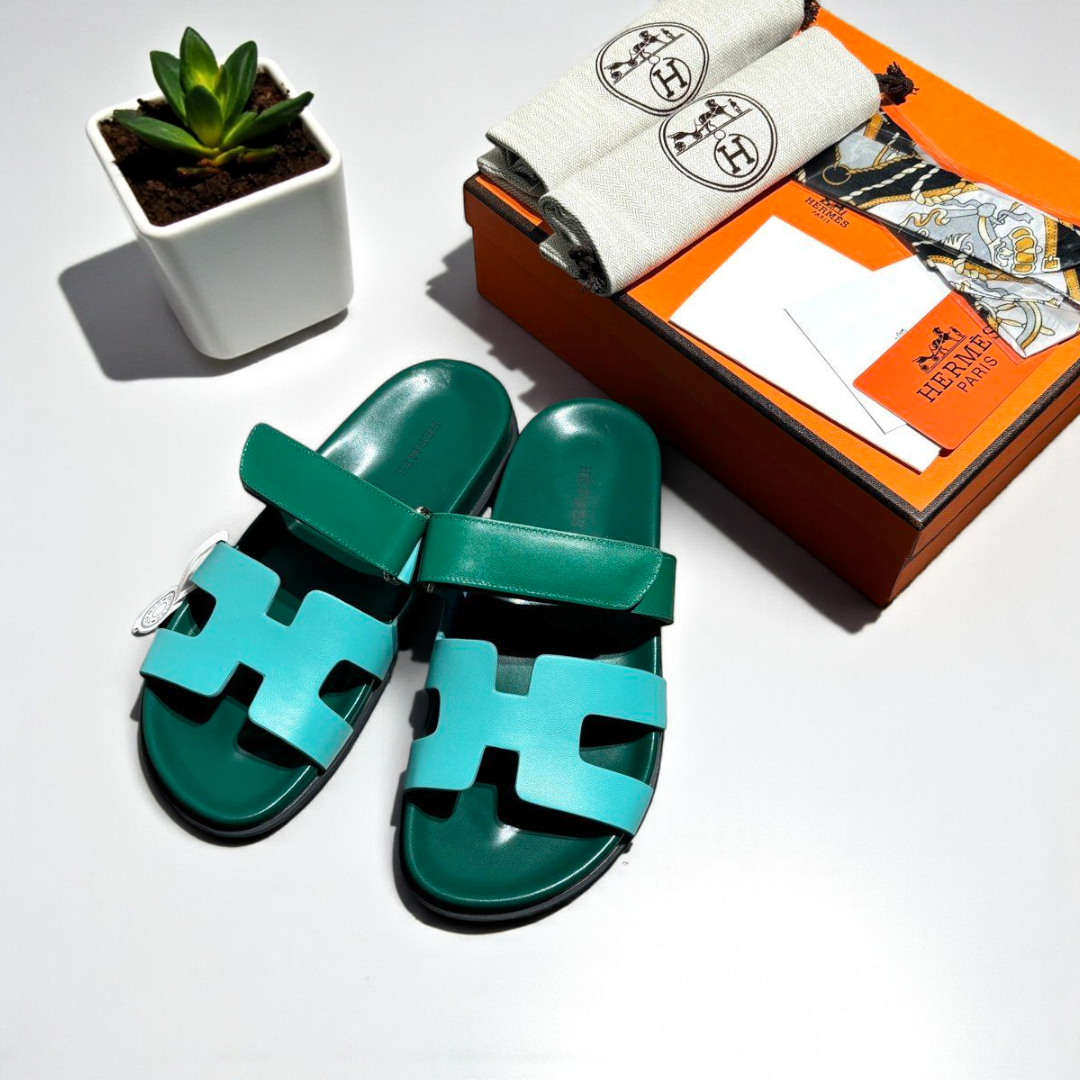
For decades, the easiest way to recognise luxury was to look for a logo.
Today, among some of the world’s most sophisticated luxury consumers, the opposite is increasingly true.
A pair of soft suede loafers. A white rubber sole. A perfectly cut leather sandal. An almost invisible logo that means very little to most people — and everything to those who recognise it.
This is the world of Loro Piana and Hermès footwear, two maisons whose shoes have moved from discreet insider favourites to some of the most recognisable symbols of contemporary understated luxury.
The phenomenon is particularly visible in places where international wealth gathers: yachts, resorts, private clubs, airports, business districts and destinations such as Dubai, Monaco, Saint-Tropez and Ibiza.
And what is fascinating is that neither brand needed a sneaker covered in logos to achieve it.
Instead, they created something far more powerful.
A uniform for people who no longer need their clothes to explain how much they cost.
Loro Piana: From Yacht Shoe to Billionaire Uniform
The rise of the Loro Piana loafer did not happen overnight.
Its roots go back approximately two decades.
The Open Walk was developed by Sergio Loro Piana as an elegant solution to a surprisingly specific problem: he wanted a shoe suitable for wearing on a yacht without the cumbersome appearance of traditional boat shoes.
The white sole needed to avoid marking the deck. The construction needed to be comfortable. And the shoe needed to look sophisticated enough to be worn far beyond the boat.
According to the Financial Times, the Open Walk emerged in 2006 after around two years of development. Retailers were initially sceptical. Sergio Loro Piana reportedly began giving pairs to friends, wearing them himself — including with suits — until the design gradually established its own following.
What followed became a lesson in how modern status symbols are created.
The Open Walk, and later the lower-cut Summer Walk, became increasingly associated with an extraordinarily affluent clientele.
By 2026, the Financial Times was describing the Summer Walk as the billionaire’s preferred island-hopping shoe, citing figures such as Jeff Bezos and noting the Open Walk on names including David Beckham and Ryan Reynolds.
Twenty years after its beginnings, the shoe has effectively become an archetype.
Soft suede.
Minimal construction.
White sole.
Almost no visible branding.
And an immediately recognisable silhouette — if you belong to the audience that knows what it is.
The Power of “If You Know, You Know”
The Summer Walk is a perfect product for the quiet-luxury era because its status depends largely on recognition.
There is no giant monogram.
No oversized hardware.
No obvious attempt to communicate its price.
A current classic suede Summer Walk is listed by Loro Piana in the UAE at approximately AED 4,200, while particular constructions and materials can push the price considerably higher. One current suede variation is listed at AED 6,850.
Yet visually, the shoe remains extraordinarily simple.
That contradiction is essential to its appeal.
The wearer knows.
Other Loro Piana clients know.
But the product does not need universal recognition.
This is luxury functioning almost as a private language.
And it appears to resonate particularly strongly with newly wealthy consumers who prefer to signal taste rather than obvious expenditure. In July 2026, Business Insider reported that Loro Piana had become one of the labels increasingly favoured by the new generation of wealthy figures emerging from the artificial-intelligence boom, with its understated loafers fitting naturally into that wardrobe.
The status symbol has changed.
The logo has been replaced by the silhouette.
Then Came the Hermès Chypre
Hermès arrived at a similar destination through a very different shoe.
The Chypre sandal, launched in 2021, combines an anatomical rubber sole with an adjustable upper structured around the maison’s unmistakable H shape.
It is more visibly Hermès than a Summer Walk is visibly Loro Piana, but it follows the same contemporary luxury formula:
comfort, extraordinary materials, effortless styling and enough brand recognition to communicate status without becoming conventional logo-heavy footwear.
The Chypre now exists in a huge variety of leather, suede, canvas, denim and seasonal interpretations.
On Hermès’ UAE site in August 2026, standard versions sit around AED 4,485–4,490, while embellished variations can climb significantly higher — including a current Clou de Selle version listed at AED 9,320.
And the sandal’s cultural visibility continues to grow.
In August 2026, GQ documented Manchester City star Erling Haaland wearing a Naturel pair of Chypres while holidaying and boarding a yacht in Antibes — almost the perfect setting for this new form of relaxed luxury.
The shoe has effectively moved beyond “designer sandal” status.
It has become part of the modern luxury uniform.
And the Oran Never Left
Before the Chypre became an obsession, Hermès already had another extraordinarily recognisable footwear icon:
the Oran sandal.
The difference is important.
The Chypre is chunkier, more contemporary and more casual.
The Oran is almost the opposite: thin, minimalist and defined by its simple H-shaped upper.
Its endurance demonstrates why this footwear boom cannot be dismissed as one short-lived social-media trend.
In summer 2026, Victoria Beckham was photographed in Ibiza wearing the classic cognac-toned Hermès Oran — a reminder that while fashion’s sandal trends change continuously, certain Hermès shapes have become permanent wardrobe references.
Meanwhile, Hermès continued to push elevated casual footwear on its Spring 2026 runway. GQ identified sophisticated leather flip-flops as one of the season’s major menswear footwear directions, specifically citing Hermès among the houses leading the movement.
The message across luxury fashion is remarkably consistent.
Formal footwear is losing ground.
Comfort is no longer the opposite of luxury.
The richest shoe in the room may now be the simplest one.
Why Is This Happening Now?
Several forces have converged.
Luxury Has Become More Casual
The traditional division between formal and casual wardrobes has weakened.
A billionaire no longer necessarily needs an Oxford shoe with tailoring.
A Summer Walk can accompany linen trousers, cashmere, denim or even an informal suit.
A Chypre can move from yacht to resort to lunch without looking out of place.
Luxury consumers increasingly expect products to adapt to their lives rather than force their lives to adapt to the product.
Quiet Luxury Changed the Status Game
The enormous cultural rise of understated brands altered what “expensive” is supposed to look like.
Consumers familiar with Loro Piana, The Row, Brunello Cucinelli or Hermès do not necessarily need a logo to identify luxury.
This produces a more exclusive type of recognition.
The product becomes a signal primarily to other people who understand the signal.
Comfort Became Non-Negotiable
Both the Summer Walk and Chypre solve practical problems.
Loro Piana describes the Summer Walk as lightweight, soft and largely handmade, with its non-slip sole rooted in the model’s nautical origins.
Hermès describes the Chypre as a “techno-sandal” combining an anatomical rubber sole with an adjustable strap.
Their success is therefore not simply aesthetic.
These are luxury products designed to be used repeatedly.
And repeated use is precisely what turns a product into a uniform.
Popularity Has Created Another Problem: Availability
This is where the phenomenon becomes particularly interesting.
Knowing which shoe you want does not mean you can necessarily buy it.
At the time of writing, for example, Loro Piana’s UAE website lists the classic beige suede Summer Walk at AED 4,200 but marks it Out of Stock. Another current Gull Gray version is also shown as out of stock.
Hermès presents a broad Chypre collection, yet individual combinations can present the same problem: a particular colour may appear online while the desired size is unavailable. One current Naturel calfskin listing explicitly states that the selected size is no longer available.
And this is where a supposedly simple shoe becomes surprisingly difficult to source.
A customer rarely wants merely:
“a Summer Walk.”
She or he wants:
a Summer Walk in a particular suede colour, in a specific size, possibly from a past season, and preferably immediately.
The same is true of Hermès.
A client might want a Chypre in Étoupe.
Or Naturel.
Or a particular seasonal pink.
Perhaps suede instead of calfskin.
Perhaps a discontinued variation seen months earlier.
And suddenly the search universe becomes considerably smaller.
Scarcity Has Created a Secondary Market
The Chypre demonstrates this particularly clearly.
StockX currently shows certain versions offered above their recorded original retail prices.
For example, the women’s Naturel calfskin Chypre, originally recorded by StockX at a $1,125 retail price, currently has an asking price of approximately $1,978 before marketplace fees. Another Beige Mastic version with a recorded $910 retail price shows a $1,611 current ask and a $1,480 last sale.
That does not mean Chypres should be treated as investments.
Marketplace asking prices fluctuate, liquidity varies significantly between colours and sizes, and not every pair appreciates.
What it does demonstrate is something simpler:
for certain configurations, immediate availability itself has value.
The customer may be willing to pay more because the boutique does not have the pair they want.
The New Luxury Is Access
This is perhaps the most important part of the Loro Piana and Hermès footwear phenomenon.
Neither shoe was designed to look spectacular from across a room.
Their power is subtler.
They are comfortable.
They are beautifully made.
They are recognisable to the right audience.
And increasingly, the exact pair people want is not necessarily easy to obtain.
Luxury therefore moves beyond ownership.
It becomes access.
Dolce Vita Shopping: Finding the Pair Everyone Wants
This is precisely where Dolce Vita Shopping becomes particularly valuable.
Our strength is not simply offering the models that are currently popular.
It is finding the specific version that is difficult to obtain.
The Loro Piana Summer Walk in the colour that has disappeared from boutiques.
The exact size that is sold out across conventional retailers.
The Hermès Chypre from a previous collection.
The seasonal material or colourway a client saw months ago and can no longer locate.
The Oran, Chypre or Loro Piana loafer in the exact configuration required.
Because in today’s luxury footwear market, identifying the product is often easy.
Finding the right pair is the difficult part.
Dolce Vita Shopping specialises in searching beyond standard retail availability, sourcing sought-after and difficult-to-find footwear through an international luxury network.
The brief can be incredibly specific.
Brand. Model. Colour. Material. Size. Condition.
And that specificity is exactly where specialist sourcing has the greatest value.
The rise of Loro Piana and Hermès footwear tells us something important about luxury in 2026.
The most desirable item does not always have to be the loudest.
Sometimes it is simply the pair everyone suddenly wants —
and almost nobody can find in the right size.
Dolce Vita Shopping — We find what others cannot
Tell us what you're hunting →