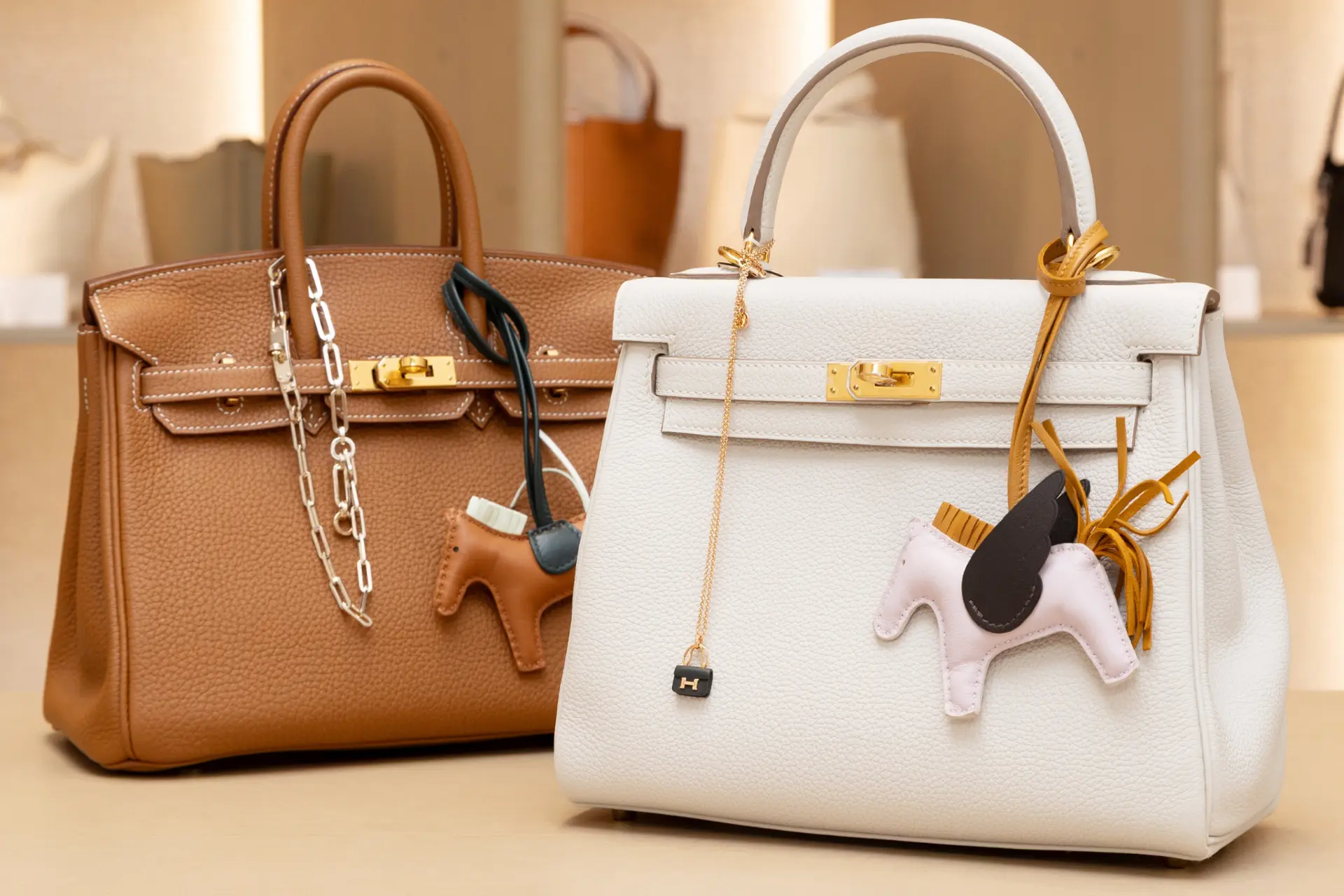
Impossible to Find: The Handbags That Have Become Modern Collectibles
Limited editions, private allocations, discontinued colours and runway creations: inside the world of handbags that cannot simply be bought.
There are luxury handbags, and then there are handbags that rarely make it to the shop floor at all.
They may be produced for a single season. Offered only to selected clients. Created in a colour combination that will never be repeated. Made from an exceptionally scarce material. Presented on a runway and manufactured in tiny numbers. Or discontinued before the wider market has even realised how desirable they will become.
For collectors, this distinction changes everything.
Because at the highest level of the handbag market, ownership is not determined by price alone.
It is determined by access.
And as availability decreases, the search for the right piece can become considerably more difficult than the decision to buy it.
Rarity Is More Complicated Than “Limited Edition”
The expression limited edition is frequently associated with collectability, but the most sophisticated handbag collectors look much further.
True rarity can emerge from several different factors.
A specific model may have been available for only one season. A maison might retire a colour permanently. A particular combination of leather and hardware may have been produced in exceptionally small quantities. Some pieces are created only for runway collections, special events or highly important clients.
Then there are bespoke handbags.
And this is where rarity enters an entirely different category.
Hermès Special Order Birkin and Kelly bags, commonly known among collectors as HSS bags, are identifiable by a small horseshoe stamp next to the house stamp. They allow selected clients to choose combinations of colour, leather, stitching and hardware outside conventional production.
Sotheby’s notes that HSS pieces account for less than 15% of Hermès bags appearing in its auction sales, with especially attractive bespoke combinations commanding significant collector interest.
The result is a handbag that may technically share its silhouette with thousands of others while its exact configuration could be extraordinarily difficult — sometimes effectively impossible — to reproduce.
For a collector, the details create the rarity.
The Hermès Himalaya: When a Handbag Becomes an Object of Art
Few handbags illustrate this better than the Hermès Himalaya.
Its name comes from the extraordinary gradation of its Niloticus crocodile skin, transitioning from darker grey into an almost luminous white, reminiscent of the snow-covered Himalayan mountains.
But its desirability is not simply visual.
Himalaya Birkins and Kellys are produced in extremely limited quantities, and access has historically been concentrated among some of Hermès’ most important clients. Christie’s describes the Himalaya Kelly as being produced in the most limited numbers and documents examples achieving hundreds of thousands of euros at auction.
The Diamond Himalaya versions take this further, replacing conventional hardware with white gold and diamonds.
These are not handbags that a customer should expect to encounter by casually entering a boutique.
The scarcity is structural.
Materials are difficult to source. Production is extraordinarily specialised. Quantities are restricted. And international movement of certain exotic-skin pieces can also involve regulatory requirements such as CITES documentation.
In June 2026, for example, Sotheby’s offered a 2015 Himalaya Birkin 25 with an estimate of $110,000–$180,000.
At this point, the handbag exists somewhere between fashion, craftsmanship and collectible object.
The Birkin Faubourg: A Boutique Transformed Into a Bag
Scarcity becomes even more fascinating when a maison deliberately creates something that departs from its permanent collection.
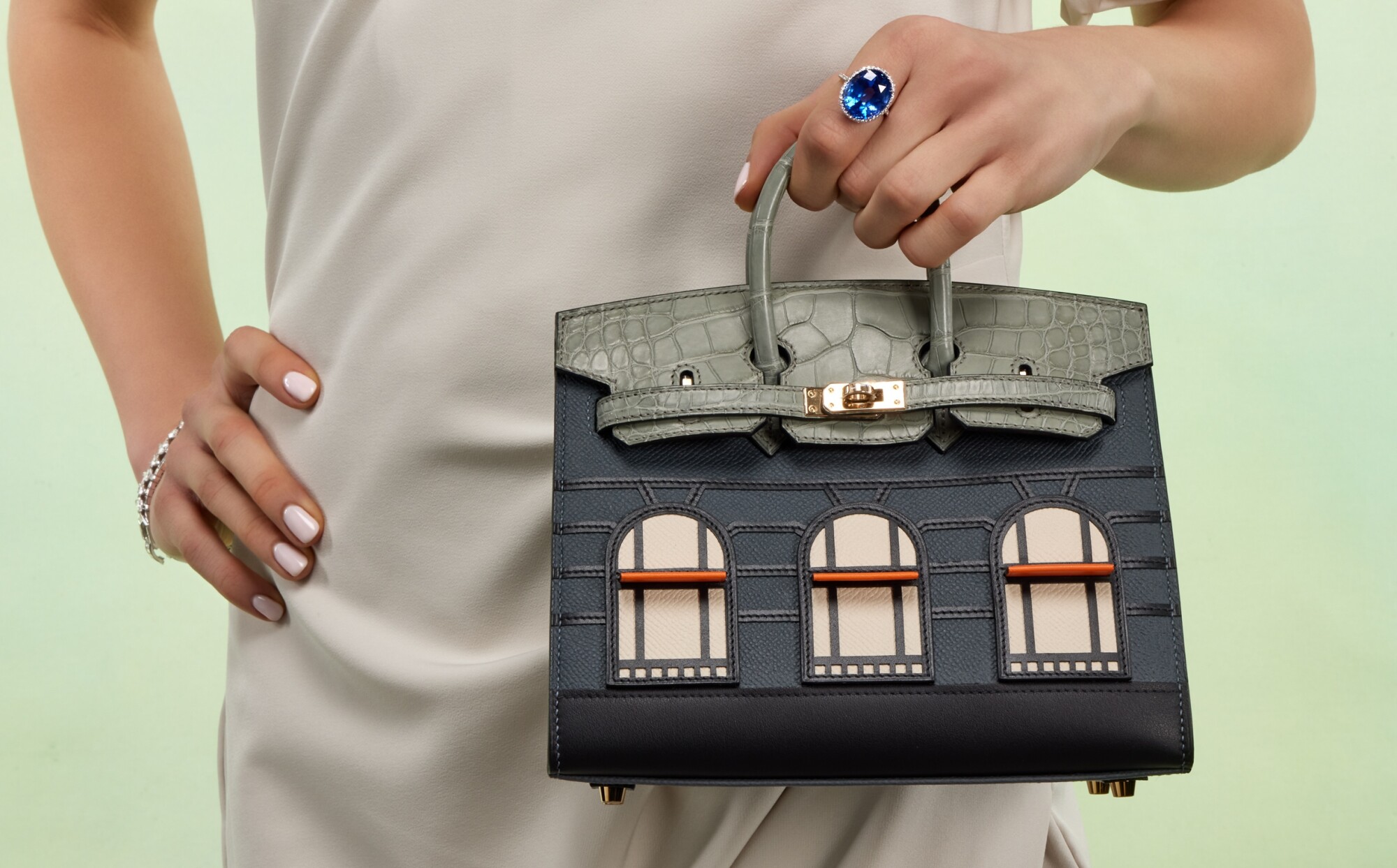
One of the strongest examples is the Hermès Birkin 20 Faubourg.
Rather than simply changing the colour of a conventional Birkin, Hermès transformed its historic flagship at 24 Rue du Faubourg Saint-Honoré in Paris into the design itself.
Windows, awnings and architectural details appear across the miniature 20-centimetre bag.
The result is unmistakable.
And intentionally scarce.
Different interpretations of the Faubourg have appeared in limited quantities, including highly coveted versions such as the Neige or Snow edition. Sotheby’s recorded a Birkin 20 Faubourg Snow selling for $234,000 in 2024, after another example had reached $302,400 in 2022.
That price movement also reveals something essential about collectible handbags.
Rare does not mean the value only moves upward.
Secondary-market prices can rise dramatically, stabilise or decline as tastes and market conditions evolve.
What scarcity does is create the possibility of a market in which extraordinary demand is competing for a permanently restricted number of pieces.
Collectability and guaranteed financial return are not the same thing.
Chanel: When the Runway Becomes the Collector’s Market
Hermès is not alone.
At Chanel, some of the most intriguing collectibles are not necessarily Classic Flaps.
They are the pieces created for a particular runway, Métiers d’Art collection or moment in the history of the house.
Under Karl Lagerfeld especially, Chanel produced extraordinary objects that deliberately blurred the line between handbag and sculpture: Hula Hoop bags, Matryoshka evening bags, rocket-shaped minaudières, perfume-bottle bags and elaborate runway creations.
Many were never intended to become permanent collection staples.
That is exactly why collectors pursue them years later.
A striking example appeared in December 2025, when a 2014 Chanel Runway Silver & Black Lambskin Shopping Basket Bag sold at Christie’s for $152,400, establishing a world auction record for a Chanel handbag at the time and achieving more than ten times its low estimate.
The bag’s value was not based on practicality.
It was based on its identity.
Its runway provenance. Its unmistakable design. Its scarcity. Its connection to a specific chapter of Chanel history.
The more unusual the piece, the less interchangeable it becomes.
Colour Can Be Rarer Than the Bag Itself
Collectors also understand something casual buyers often overlook:
Sometimes the rarity is not the model.
It is the configuration.
Consider a Birkin 25.
The silhouette itself is globally recognised. But combine a desirable size with an exceptional discontinued colour, unusual hardware, the right leather and a Special Order horseshoe stamp, and the market changes completely.
In the first half of 2026, Sotheby’s highlighted a White and Gris Perle Clémence HSS Birkin 25 with rose-gold hardware that realised $83,200 — outperforming a number of exotic-skin bags offered in the same period.
Why?
Because sophisticated collectors increasingly understand that rarity is not determined by material alone.
It is the combination that matters.
Colour.
Leather.
Size.
Hardware.
Year.
Condition.
Special-order status.
Production history.
And the probability of encountering the same configuration again.
Condition Changes Everything
As handbags transition from fashion objects into collectibles, condition becomes increasingly important.
A rare bag may exist in hundreds of examples.
Far fewer may survive ten or twenty years later in exceptional condition.
Corners wear. Handles darken. Exotic skins require careful preservation. Hardware scratches. Interiors accumulate signs of use. Original accessories disappear.
That is why two examples of exactly the same bag can command dramatically different levels of collector interest.
For an exceptional piece, buyers may look for its original box, dust bag, raincoat, lock, keys, clochette, receipts or accompanying documentation.
With older and more unusual pieces, provenance becomes equally important.
The question is no longer simply:
“Is this the bag?”
It becomes:
“Is this the example of the bag I want to own?”
Why Certain Handbags Become More Valuable
There is no formula guaranteeing that a luxury handbag will appreciate.
Thousands of expensive bags never become important collectibles.
The pieces that do tend to have something more.
They may combine:
Scarcity — genuinely restricted supply.
Desirability — sustained demand from serious collectors.
Historical significance — an important collection, designer or moment in the maison’s history.
Exceptional configuration — rare colours, materials or hardware.
Condition — particularly important as pieces become older.
Provenance — a documented and compelling history.
Cultural relevance — a design recognised far beyond the traditional handbag market.
The interaction between those factors creates something price alone cannot manufacture:
collectability.
Sotheby’s reported in late 2025 that it had sold nearly $100 million worth of Hermès Birkins since 2021, illustrating just how established the collector market for the most desirable handbags has become.
Finding One Is the Real Luxury
Once a collector understands what they want, another problem begins.
Finding it.
A particular handbag may not exist in any current boutique inventory.
It may belong to a private collection in Paris.
Another could be with a specialist dealer in Tokyo.
The desired colour may have been discontinued five years earlier.
A runway piece may appear publicly only once every few years.
And the challenge becomes even greater when the client requires not simply the correct model, but the correct size, material, colour, hardware, year and condition.
At this level, sourcing is not shopping.
It is research, relationships, authentication, market knowledge and access.
Dolce Vita Shopping: Access to What Others Cannot Find
This is where Dolce Vita Shopping operates differently.
Our strength is not limited to offering luxury handbags that are already readily available.
It lies in the ability to search for the pieces that are not.
Rare Hermès configurations. Special Order Birkins and Kellys. Limited editions. Discontinued colours. Collector-grade Chanel pieces. Runway creations. Exceptional materials. Unusual sizes. Highly sought-after pieces that may never appear in a conventional boutique or online catalogue.
For clients searching at this level, telling us “I want a Birkin” is only the beginning.
Perhaps it is a Birkin 25.
Perhaps only a particular shade will do.
Perhaps the preference is for rose-gold hardware.
Perhaps it needs to be an HSS Special Order.
Perhaps it must be unworn, complete and from a particular production period.
That level of specificity is precisely where specialised sourcing matters most.
Through an international network and a sourcing approach built around difficult-to-find luxury, Dolce Vita Shopping searches beyond traditional retail availability to locate exceptional pieces for exceptionally demanding clients.
Because the world’s rarest handbags are rarely waiting behind a shop window.
Often, they need to be found.
And finding them is what we do.
Dolce Vita Shopping — We find what others cannot
Tell us what you're hunting →